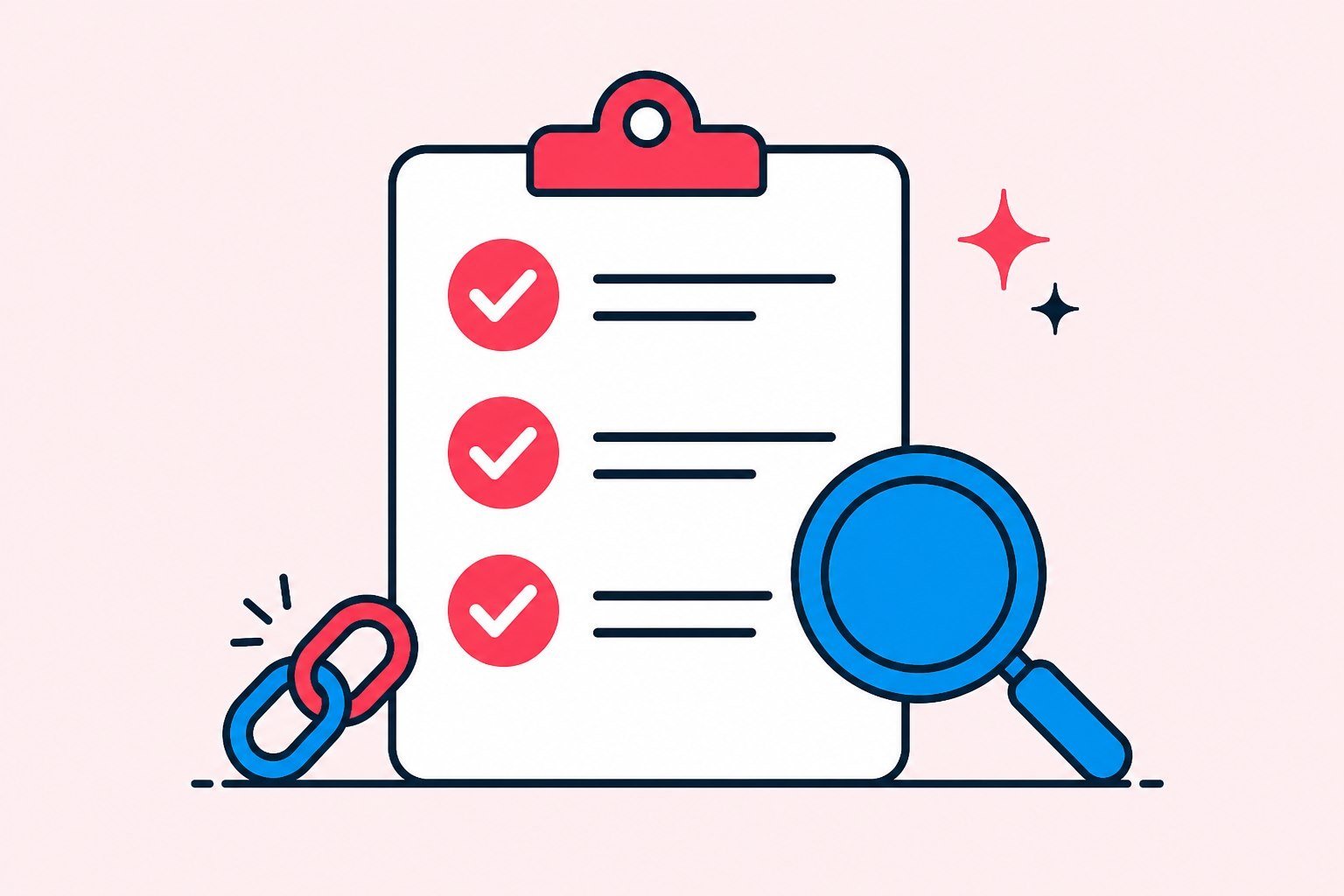
SEO and AI search checklist for link-in-bio pages in 2026: title, meta, OG, structure, mobile speed, FAQ for AI Overview, and UTM measurement.
Link in bio SEO in 2026 is no longer “a pretty button page on Instagram.” This checklist helps you run biolink SEO 2026 clearly enough for Google and AI search biolink systems to have something worth citing - title, meta, Open Graph, structure, mobile, FAQ - then measure after you change it. Treat it as an AEO checklist biolink you can tick and operate, not a deep DNS or SSL tutorial. Build the hub at /create-bio-link.
Why a bio page still needs search optimization
Many people assume a bio only serves someone already standing on Instagram, TikTok, or YouTube. In practice the bio URL is still a web page: it has a title, it has content, it gets pasted into chat apps, and it can appear when someone searches a brand name or a specific question. If the page is only a column of unlabeled buttons, search engines and AI answer tools have almost nothing to “understand.”
Link in bio SEO does not replace a long blog pillar or a multi-page website. It is the minimum layer that keeps the page from being invisible when strangers arrive from search, when the link is shared outside social, or when an AI system needs a short trustworthy snippet. Treat the bio like a public business card that both people and machines can read.
Simple self-check: if a stranger opens the bio URL without opening your Instagram, do they understand what you sell in five seconds? If not, optimization starts there - not with button colors.

Link in bio SEO: practical title, meta, and Open Graph
Title should carry brand name plus what you do, written in human language - not a stuffed keyword string. “District 3 nail studio - book online” beats “Home” or “Biolink.” Meta description in one or two sentences: short promise plus a nudge to act. Open Graph (title, description, image when shared) must match the offer currently live. Share images large enough; text on the image must stay readable when shrunk.
Quick check: paste the link into a private chat on your phone and look at the preview card. Redo it if the preview still shows an old campaign or a broken image. A generic title is the most common link in bio SEO mistake - and the easiest to fix.
A clean URL helps people remember and machines parse. When the brand is serious, consider a custom domain; DNS and SSL details live on Page docs, not in this PR checklist. This article focuses on content and on-page signals, not server configuration.
- Title: brand + what you do.
- Meta: offer + action nudge.
- OG matches the message you are selling now.
- OG image large enough; text readable when small.
- Clean URL; custom domain when the brand is ready.
Button structure and label copy - people first, machines second
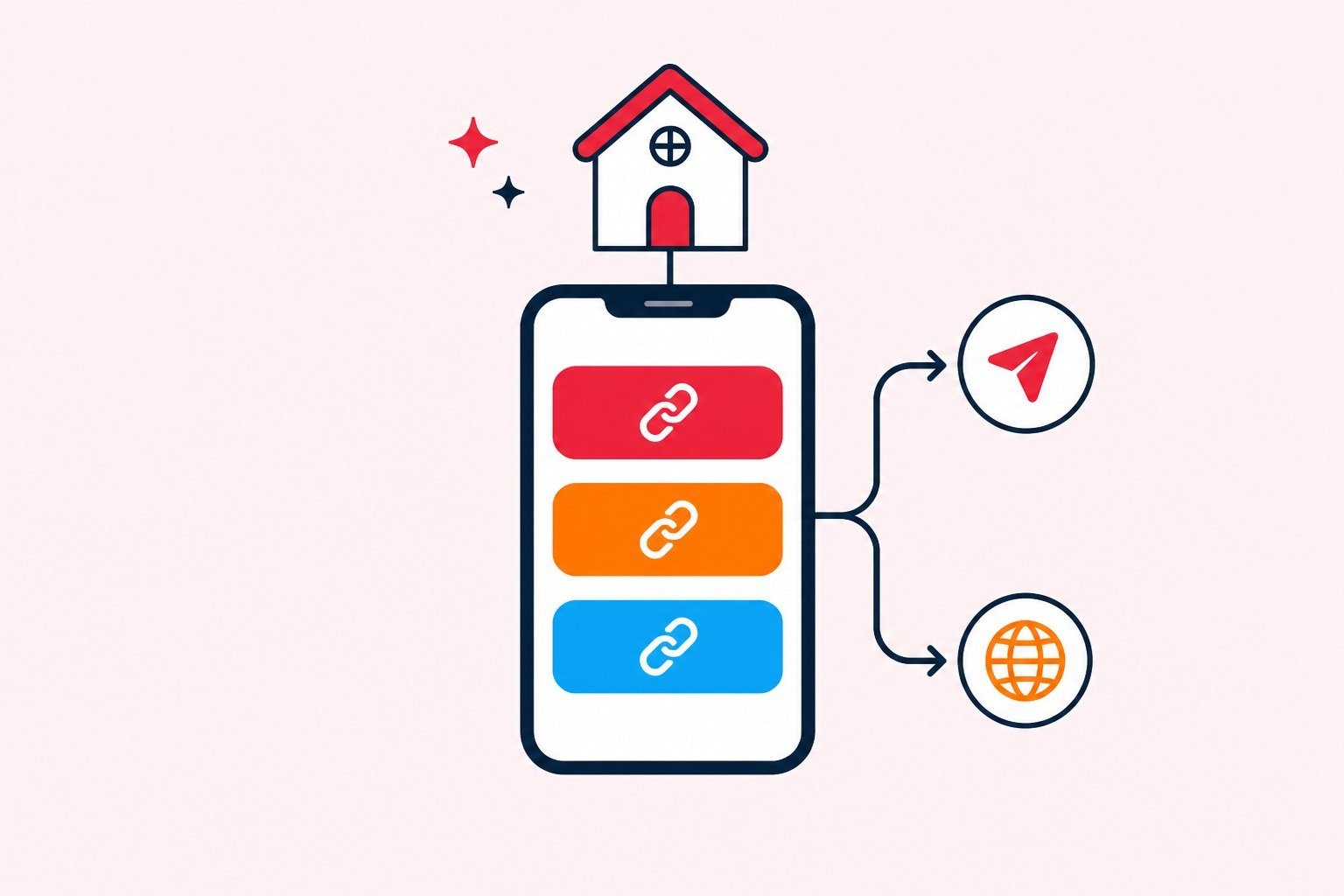
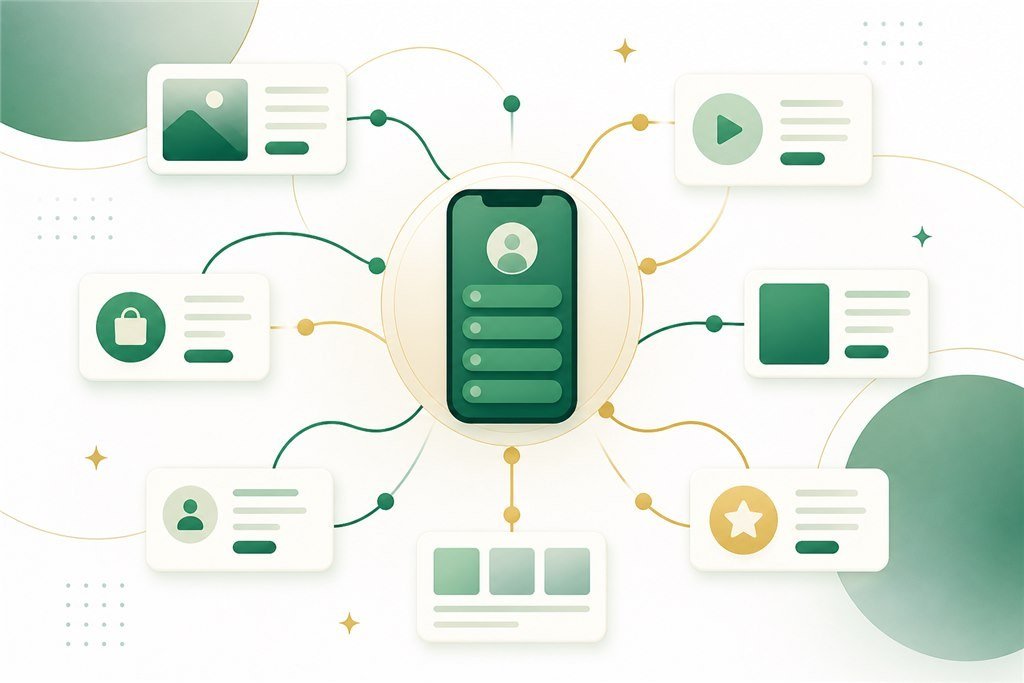
Button labels must first be clear actions for humans. Avoid a whole column of “Click here” or “Link 1.” “Book a hair consult in District 3” is both a call to action and useful context. Do not turn the bio into a keyword wall. The right balance: people first, search engines second.
Button order still follows business priority. Search optimization does not mean pushing a blog post above the buy button if this month’s goal is revenue. When you need a deeper story than one button, connect a landing - see marketing prompts for landings. Hub strategy: biolink marketing strategy. Tool comparison: Appifio vs Linktree.
A short intro sentence near the top usually helps both people and machines more than five extra buttons. If the bio is only buttons with no prose, machines have almost no paragraph to cite.
Mobile and speed - the often-forgotten part of biolink SEO 2026
Most visitors open a bio on a phone, often on mobile data. A slow page raises bounce before they read the title or tap a CTA. Compress images, drop heavy video embeds you do not need, and keep the primary button early on the screen. From a marketing angle, remember three jobs: open fast, tap easily, read clearly.
Run a monthly “weight check”: if you added embeds and large PNGs for a campaign, remove them when the campaign ends. Letting bloat live forever is how a bio slows each quarter - damaging both biolink SEO 2026 and tap rates from social.
Test on a real device on 4G, not only office Wi‑Fi. Many teams look fine on desktop while customers stand on a bus. Good experience supports both social clicks and page-quality signals - that is also the practical side of link in bio SEO.
FAQ on the bio and the AEO checklist biolink
Add three to five questions customers have actually asked: price range, service area, delivery time, return policy. Answer short, direct, no dodging. If the product supports proper FAQ markup, use it; do not invent fake FAQs just to “have schema.” The goal is usefulness - citation is a side effect.
This is the core of an AEO checklist biolink: short, clear, trustworthy content that AI answer tools can lift. AEO (answer-engine optimization) does not demand a novel on your bio. It demands honest answers to questions real people ask.
Ship fast, then refine: create a link in bio in 15 minutes. Product docs: biolink AI, biolink manual. Platform layouts: Instagram / TikTok / YouTube.
AI search biolink: how machines read a bio in 2026
AI search biolink is not magic. Answer systems prefer short, structured, verifiable facts - hours, services, area, FAQs. A button-only bio has almost nothing to quote. A bio with an intro sentence, honest FAQs, and a clear title has a better chance.
Do not expect a bio to replace a pillar blog for competitive keywords. A better expectation: cleaner brand search, reachable long-tail/local queries, and when someone asks “what does shop X do / where / roughly how much,” the bio page is not empty. That is where link in bio SEO meets AEO in practice.
Also remember: no citation guarantee. Optimize to be useful first; citation is a bonus, not the only goal. If you write only for machines and humans find it stiff, both CTR and quality signals suffer.
Measure after you optimize - do not wait for a “breakout day”
After you fix title, Open Graph, and CTAs, measure about two weeks: primary button clicks, rates by channel, forms or orders if you have them. Bio SEO rarely explodes overnight. Expect cleaner share previews, clearer brand search, and more stable click quality.
Attach UTM to campaigns - do not dump everything into “direct.” For short-link layers and reading ads sources, see short links + UTM. When the bio is a sales door, connect biolink for sales.
Four numbers cover most SMEs: hub visits, primary-CTA or form-start rate, qualified leads or orders, cost per lead/order if paid. Add qualitative notes each week: what customers ask in DMs, which objections repeat. Without notes you only see “forms dropped” and cannot tell whether price, shipping, or vague copy caused it.
Common index and signal issues - fix checklist
- New page linked from nowhere, or never clearly referenced on social.
- Duplicate or generic title (“Home”, “Biolink”, “Main page”).
- Thin content - buttons only, no intro or FAQ.
- Open Graph preview stuck on an old campaign or a broken image.
- Domain or SSL errors - fix on Page docs, do not guess inside Ads Manager.
Fix in order: content and title first, share preview next, domain infrastructure last. Many teams jump straight to DNS while the title is still “Biolink” - that is inverted priority.
Weekly operating rhythm for bio SEO
Thirty to forty-five minutes each week: check Open Graph preview, confirm title still matches the offer, review clicks and leads after the last meta change. Write down who may change title and share images, who owns the sales CTA. Before large ads: mobile QA + UTM/pixel if used. Connect a landing when a query needs a deeper page than the hub.
If the week has no ads budget: still check brand search and share previews. Organic bio SEO is not “free” in editorial hours - it only differs by not paying the platform.
Keep experiments separate from infrastructure. Changing title wording this week is an experiment. Changing domain conventions mid-month touches infrastructure. Buttons, headlines, and FAQ order may die after two weeks. Domain, SSL, and primary pixel move rarely - always with a changelog.
First three months: from a readable hub to an expansion decision
First two weeks: one offer, one CTA, one URL, one minimum measurement method. Do not open a CMS or five landings “to cover every idea.” The goal is a readable bio and a team that can read numbers. If leads arrive and nobody replies inside the promised SLA, fix sales process before you fix layout.
Weeks three to six: run small traffic - organic or light paid. Change only one variable per week: title, button, FAQ, or source. Log it. If clicks rise and leads do not, fix the page or offer before raising spend. If leads rise and money does not, inspect price, sales script, and fulfillment.
Weeks seven to twelve: scale only what is proven. Add a landing when a second offer is truly different. Add deeper FAQs when customers repeat questions the hub still cannot answer. At quarter end: what to keep, what to cut, what to double. Archive title/OG/CTA and numbers - this quarter’s memory is next quarter’s brief.
That is how you run link in bio SEO as a habit, not as a one-time “we did SEO” project.
Seasonal title and Open Graph - not “set once”
Many shops set title when they first build the bio, then forget. Three months later the offer has changed, share previews still show the old campaign, and visitors feel message mismatch. Treat title and Open Graph like a storefront sign: change them when the shelf changes. For every major campaign, spend ten minutes updating and retesting the preview on a phone.
When ads send traffic to the bio, match creative language with title and primary button. Slight drift is tolerable; total mismatch (“ads say 50% off, bio says book a consult”) raises bounce and dilutes page-quality signals. That is also where link in bio SEO meets performance marketing - not two separate worlds.
If an agency or collab joins, put title/OG rules into onboarding the same way you put UTM rules. Who may change, who approves, final review date. Writing permissions once is cheaper than ten meetings about who may touch the bio.
What “good enough” looks like before you chase citations
Teams waste months chasing AI Overview appearances while the bio still says “Biolink,” the share image is a cropped selfie, and the FAQ answers questions nobody asked. Flip the order. First make the page useful to a stranger on 4G. Then make the preview honest. Then add FAQs that match real DMs. Only after those basics should you worry about whether an answer engine might cite you.
A practical “good enough” bar for most SMEs: brand + offer in the title, matching Open Graph, one intro sentence, three real FAQs, primary CTA above the fold on mobile, and a two-week measurement window after each change. Hit that bar and you already have stronger link in bio SEO than most competitors who treat the bio as decoration. Citation upside, if it comes, rides on the same clarity. Do not wait for a perfect schema setup before shipping those basics - unfinished FAQs beat empty promises about “AI readiness.”
Related reading when you need adjacent depth: ship the hub first with the 15-minute checklist, keep selling mechanics tight via biolink for sales, and align channel intent with platform layouts. If you are still choosing between a button wall and a richer hub, the comparison in Appifio vs Linktree clarifies when AI pages help discoverability without turning the bio into a keyword dump.
In short
Link in bio SEO means making the bio readable by people and machines: clear title and Open Graph, content that is not thin, fast mobile, honest FAQs. Measure after you change things, keep a weekly rhythm, and remember DNS/SSL details live on Pages - execute the hub at /create-bio-link.
FAQ
Can a bio rank for competitive keywords?
It is usually stronger for brand search, clear local queries, and long-tail questions when content is useful. Do not expect a bio to replace a pillar blog.
Do I still need a blog if the bio is optimized?
Blogs build topic depth. The bio is a conversion hub. The layers complement each other; they do not replace each other.
Will AI answer tools cite my bio?
When information is clear, short, and trustworthy - it can be used as a source. No guarantee; optimize to be useful first.
How long until bio SEO shows results?
Share previews improve immediately. Indexing and search usually take weeks to months depending on authority and links. Measure continuously instead of waiting for a “breakout day.”
Is a custom domain required?
Not to start. Worth having when brand and SEO are serious. See Page DNS/SSL docs when you are ready to attach one.