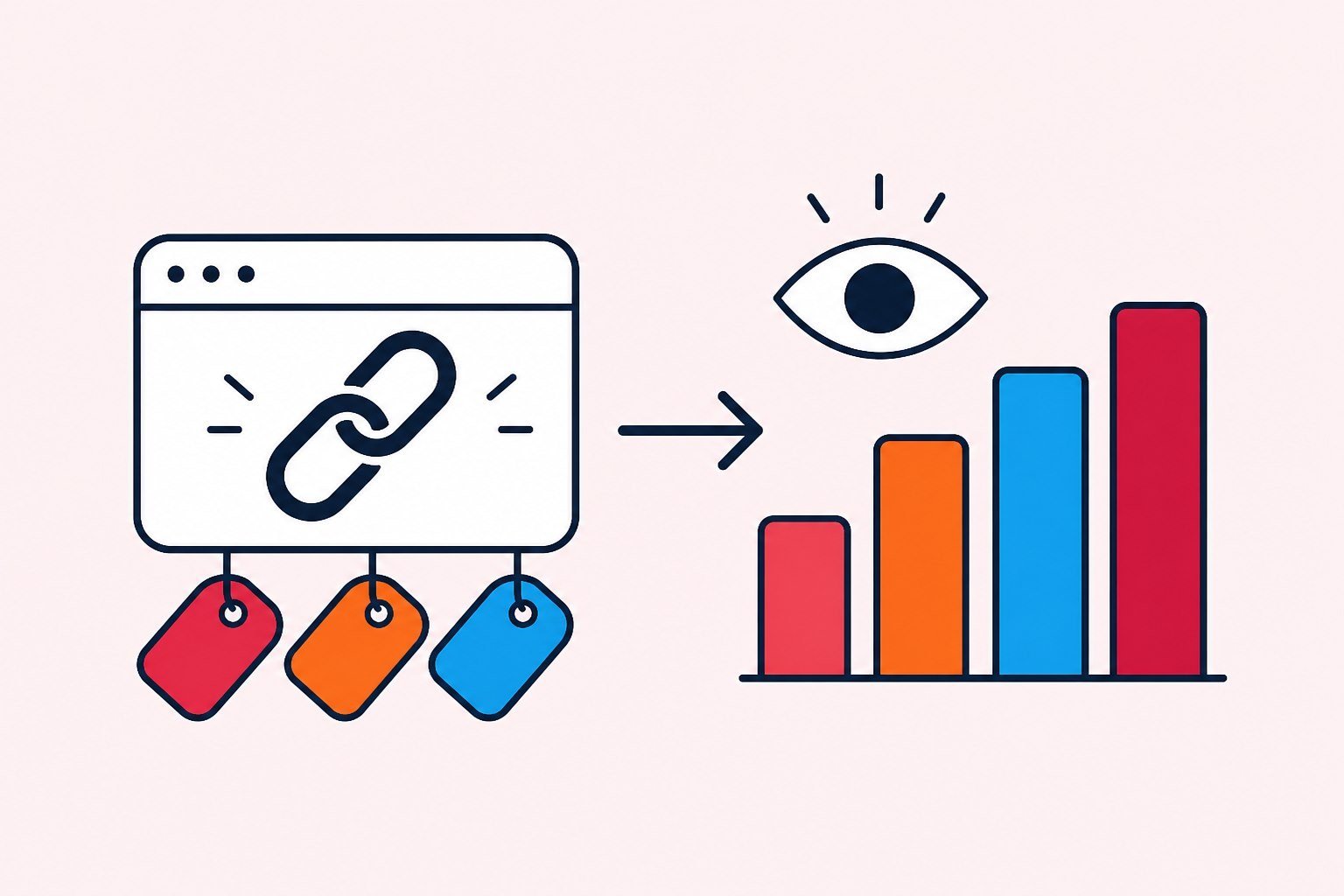
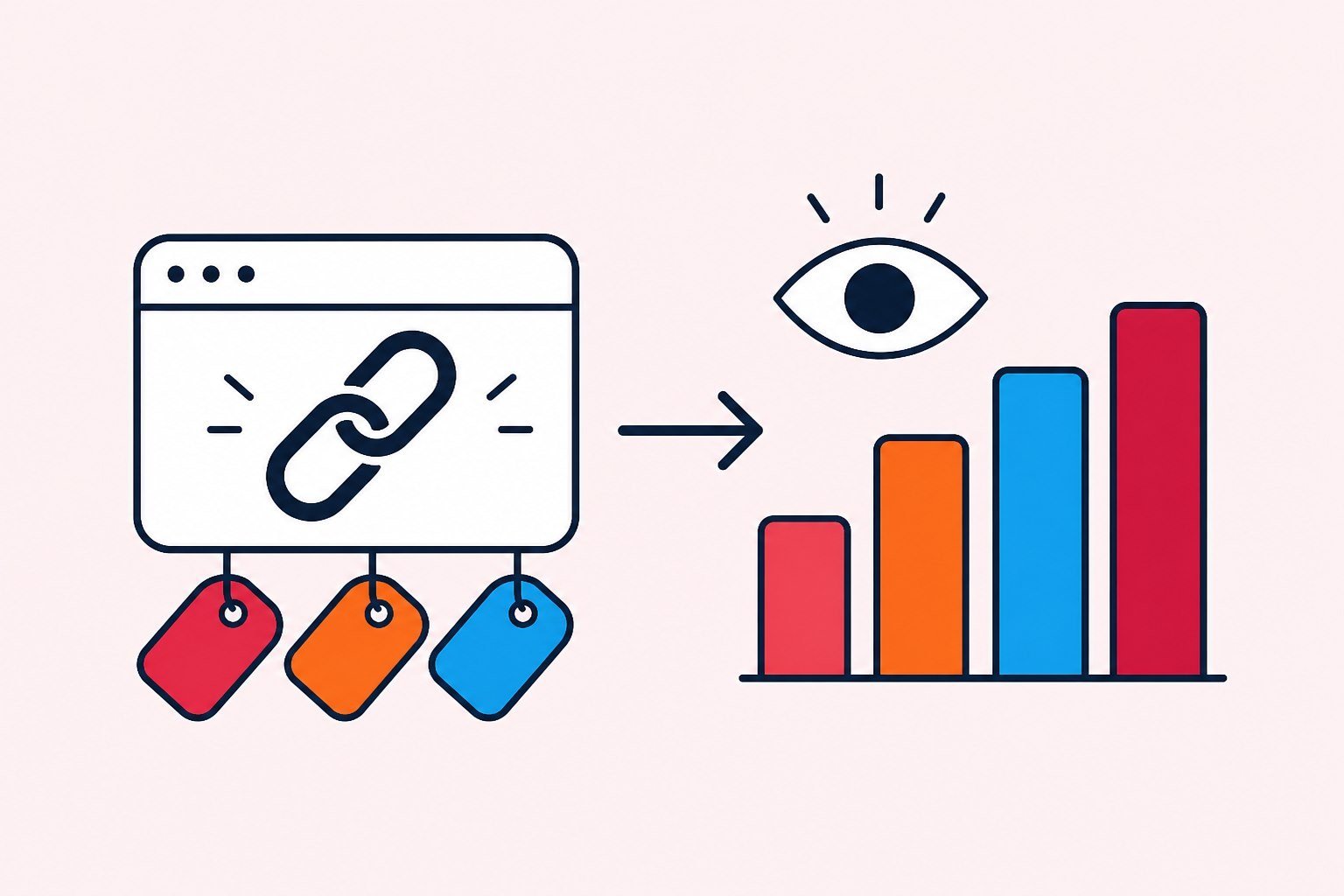
Measure ad campaigns with short links and UTM: naming conventions, short links in Facebook and Google Ads, reading clicks, and pairing with pixel tracking.
Short link UTM is the minimum measurement pair when you run ads and need clean source reading. This article explains why the pair matters for Facebook and Google Ads, how to name parameters, how to read clicks, and where pixels add value - covering UTM Facebook ads, ad campaign short links, and disciplined campaign tracking. Strategy and standards, not a click-by-click UI guide. Funnel map: short links in marketing funnels.

Short link UTM in paid media - role and naming traps
UTM parameters are not decorative suffixes. They are labels that help analytics or CRM know where traffic came from. Without a consistent convention, reports collapse into direct/none or mixed sources - then the team optimizes by gut feel. UTM tells the source story. Short links keep a stable published address and measure clicks on that URL itself. Together they are two layers, not one magic button.
Common naming mistakes: inconsistent abbreviations across the team (fb vs meta vs facebook); stuffing full headlines into utm_campaign; spaces or exotic characters; changing convention mid-month; skipping utm_content when you need creative splits. Reports stop aggregating and learning resets every sprint. The golden rule is short, stable naming written into one shared sheet. Creating and configuring short links lives on the shortlink Page and settings Page.
If two people can invent two different UTM strings for the same ad, you do not have a system yet. Fix the sheet before you buy more traffic. Naming debt compounds faster than creative fatigue. This is also where UTM Facebook ads reporting often breaks: Ads Manager says one thing, CRM another, and the team argues with two dashboards.
Write the convention in plain language a contractor can follow on day one. If onboarding requires a twenty-minute verbal explanation every time, the convention is not written clearly enough to survive growth.

Why ad campaign short links belong in Facebook and Google Ads
Destination URLs with UTM are long and ugly on creatives. Short links clean the creative surface and separate the public address from destination and query. When you change landings mid-campaign, the short link can stay stable on live ads (subject to platform rules), which reduces mass ad-set edits just because the page changed.
For print, SMS, QR, and influencer seeding, short links are nearly mandatory - long URLs create friction and typos. For paid social, the biggest gains are operations plus an intermediate click signal before the page. Do not expect shorteners to magically lift CTR if creative and offer are weak; expect better control and cleaner observation.
Ad campaign short links also cut support load. Debugging “which link did the customer tap?” is faster when aliases are readable, not two-hundred-character strings pasted from Ads Manager. That is why a short link UTM stack is worth building before you raise budget.

UTM parameter checklist: source, medium, campaign, content
utm_source: platform or source (facebook, google, tiktok, newsletter).utm_medium: type (cpc, paid_social, email, influencer).utm_campaign: internal campaign code (202608_flash_acme).utm_content/utm_term: split creative, audience, or keywords when needed.
Prefer lowercase, consistent dashes or underscores, and avoid characters that break encoding in your analytics stack. One campaign equals one approved naming pack. When an agency joins, put this sheet in onboarding before they get publish rights.
Example: ?utm_source=facebook&utm_medium=paid_social&utm_campaign=202608_preorder&utm_content=video_ugc_03. The short link points at a destination already carrying that query. Post-click pixel learning belongs in the article on Facebook Pixel for biolink and short-link destinations.
Campaign tracking is not “UTM exists, done.” Always test a real click, check the address bar and analytics, then scale. Redirect setup detail lives on Shortlink Pages. This is also when you verify UTM Facebook ads naming matches the internal sheet - Ads Manager and CRM should not invent two dialects.

UTM Facebook ads when the path is bio → short link → landing
Not every click is ads → landing direct. Many real funnels look like this: someone watches a Reel, opens the bio, taps a CTA, passes a measured short link, then hits a landing or form. Short links can sit on bio buttons per campaign while the overall bio stays stable. When the bio is the sales door, connect to biolink for sales.
Minimum workflow: (1) lock destination and UTM; (2) create a short link by convention; (3) test mobile redirect; (4) paste into ads or bio; (5) confirm pixel on destination; (6) read clicks after forty-eight hours before scaling. Skipping the mobile test is the fastest way to discover dead links after budget is already spent.
Write placement next to each alias on the sheet: “IG bio button 2,” “Meta ad set B,” “email hero.” When results diverge, you will know whether the pipe or the placement changed. That is operational short link UTM practice - not slide-deck theory.
Reading click stats - which KPIs actually matter
Short-link clicks are pipe KPIs, not revenue KPIs. Use them to answer one question: did creative and placement earn touches on the URL? Low clicks point at creative, placement, or CTA. High clicks with weak conversion point at landing, offer, form, or page speed. Do not raise bids only because you got clicks.
Compare clicks across aliases in the same window to pick winning creative or channel pairs. Close the loop with conversions in analytics or CRM. Detailed click reporting lives on the statistics Page. Numbers in Ads Manager and alias clicks on the shortener must be read together - one does not replace the other.
When you read ad campaign short links, also ask: where is this alias live right now? If the sheet has no placement, you are measuring blind.
A practical habit: keep a seven-day rolling note next to each live alias - click trend, conversion note, and one hypothesis. The note does not need to be pretty. It needs to stop the team from re-learning the same lesson every Monday.

Where pixels add value after the click
UTM tells the story inside your analytics. Pixels help ads platforms learn events and build audiences. After someone passes a short link into a landing or biolink, the pixel records PageView and conversion events. Without a pixel you can still read UTM, but retargeting and lookalikes stay weak. Without UTM, the pixel still runs, but the internal team cannot explain which campaign brought the lead.
Recommended stack: short link + UTM + pixel on the destination. Ads-angle detail: Facebook Pixel on biolink and short links. Operating map: short links in marketing funnels. Measurement landing: /tracking-pixels.
Clean campaign tracking means three layers are present and the team knows which layer answers which question - not that the dashboard has more widgets.
If the team cannot explain those three answers in one sentence each, pause the budget conversation. More charts will not fix unclear ownership of the pipe, the source labels, and the ads learning layer.
Audit checklist before you raise budget
- Alias matches convention; ops sheet is updated.
- Redirect hits the right destination on iOS and Android.
- UTM covers the three to four core params; no exotic characters.
- Pixel or events fire on the destination page.
- Clicks over 48 - 72 hours show signal; conversions are not strangely broken.
- You have a plan to change destination or expire when the offer ends.
Mini case: bad decisions from missing UTM
A shop ran Meta and TikTok into the same landing with no UTM. Month-end analytics showed organic and direct mixed together; paid could not be split. The team raised budget on the channel that “felt fine” - while the other channel was delivering cheaper leads. After applying short links with UTM by convention, they saw TikTok winning on clicks and Meta winning on form quality. The scale decision flipped within a week.
Lesson: you cannot optimize what you cannot separate. Short links help operate URLs; UTM helps read source; pixels help ads machines learn. Missing one layer is survivable for a while. Missing all three leaves you guessing. Start with the sheet before you buy more traffic. When an agency joins, demand an alias map before go-live. If they refuse or say “later,” that is a weak-process signal.
This is also where UTM Facebook ads and ad campaign short links must travel together: one layer for Ads Manager reading, one layer for the internal pipe.
Weekly rhythm for short link UTM and campaign tracking
Thirty to forty-five minutes each week: read alias clicks, reconcile UTM in analytics or CRM, clean drifted naming, and confirm the pixel still fires after landing-template changes. Write who creates UTM, who publishes ads, and who reads CRM. Before scale: a real click test plus mobile redirect. If the week has no paid: still audit organic UTM on newsletter and QR. Archive winning UTM packs at month-end.
Separate utm_content experiments from source/medium/campaign infrastructure. Changing content this week is fine. Changing how you write source mid-month breaks the quarter’s report.
Short link UTM wins when the sheet stays alive. It fails when everyone invents strings “just for today.”
First ninety days: from clean measurement to a scale decision
Days one to fourteen: one offer, one destination, one UTM pack, one alias. Do not open five landings and five pixels. The goal is a clean pipe and a team that can read numbers. If leads arrive and nobody replies inside the promised SLA, fix sales process before you fix UTM.
Days fifteen to forty-five: small traffic. Change only one variable per week - creative, audience, or landing - and keep a changelog. Compare a seven-day window with the previous seven days, not with “how this week felt.” Clicks up and leads flat means fix the page or offer, not the bid.
Days forty-six to ninety: scale only what is proven. Add a new channel alias when the channel is truly different. Add utm_content when you truly need creative splits. At quarter end: keep, kill, or double. That is campaign tracking as habit - not a checklist you run once and forget.
If you finish ninety days with clean pipes and still weak revenue, the next lever is usually offer, sales follow-up, or fulfillment - not another naming system. Measurement exists to show you where to look, not to invent a new dashboard every month.
Organic UTM needs the same discipline as paid
Newsletters, event QR, influencer seeding, and long-lived YouTube captions all carry traffic. If you only tag paid, month-end reports inflate organic/direct and you never learn which content actually pulled people. Use the same convention as paid: short source, medium, campaign - written on the sheet.
One difference: organic often outlives a single ad set. Aliases and UTM should carry a month or wave code, or accept one stable hub with utm_content by content wave. Do not invent fifty unread variants to look professional.
Short link UTM on organic lets content and ads teams speak the same number language. In meetings, ask “how many forms did the August newsletter bring?” instead of “this week felt fine.” That is how campaign tracking grows past pure paid into a habit of measuring every intentional pipe.
Before you scale influencers: one dedicated short link, one UTM pack, one posting SLA, one day to read clicks. When the contract ends, close or retarget the destination. A dead promo still living in someone else’s Story highlight trains customers to wait for codes forever.
A weekly meeting tip: open the alias sheet beside Ads Manager. Ask in order - how are alias clicks, how does UTM look in analytics, how do forms look in CRM - before debating creative. Three layers, three questions. Skip that step and the meeting becomes preference. UTM Facebook ads and short-link clicks complement each other; neither replaces the other.
When you report to a founder or client, separate pipe pull (clicks) from conversion quality (leads or orders). Mixing the two is how teams scale the wrong channel. That separation is the everyday spirit of ad campaign short links.
Keep one archive folder per quarter: winning aliases, UTM packs, and one paragraph on why they won. Next quarter’s brief should start from that folder, not from memory.
In short
Short link UTM separates the public address from source labels. Convention, a real click test, and a pixel on the destination create a readable pipe before you scale. Start at /url-shortener; configuration detail lives on Shortlink Pages; the larger funnel map is short links in marketing funnels.
FAQ
UTM makes links long - how do short links help?
Keep UTM on the destination (or via the tool’s parameter rules). The public URL on creatives or bio stays short. Users see a clean address; measurement still keeps source labels.
Do short links preserve UTM query on redirect?
Correct design passes UTM through to the destination. Always test a real click and check the address bar / analytics before scaling. Redirect detail lives on Shortlink Pages.
How fresh are click stats - enough for daily ads decisions?
For most SME campaigns, daily or every-48-hour reads are enough to keep, pause, or scale at the alias level. Large budget calls should also look at conversions and lead quality, not clicks alone.
Do I need different UTM for every ad?
If you need creative or audience splits, use
utm_content. If you only need campaign-level reading, one campaign pack can be enough - do not invent hundreds of unread variants.Can short links replace pixels?
No. Short links measure URL touches; pixels serve ads learning and audiences. They complement each other in the minimum stack.