Biolink marketing strategy for 2026: treat link in bio as your hub, build a biolink funnel from awareness to lead, and know when Appifio Biolink AI fits.
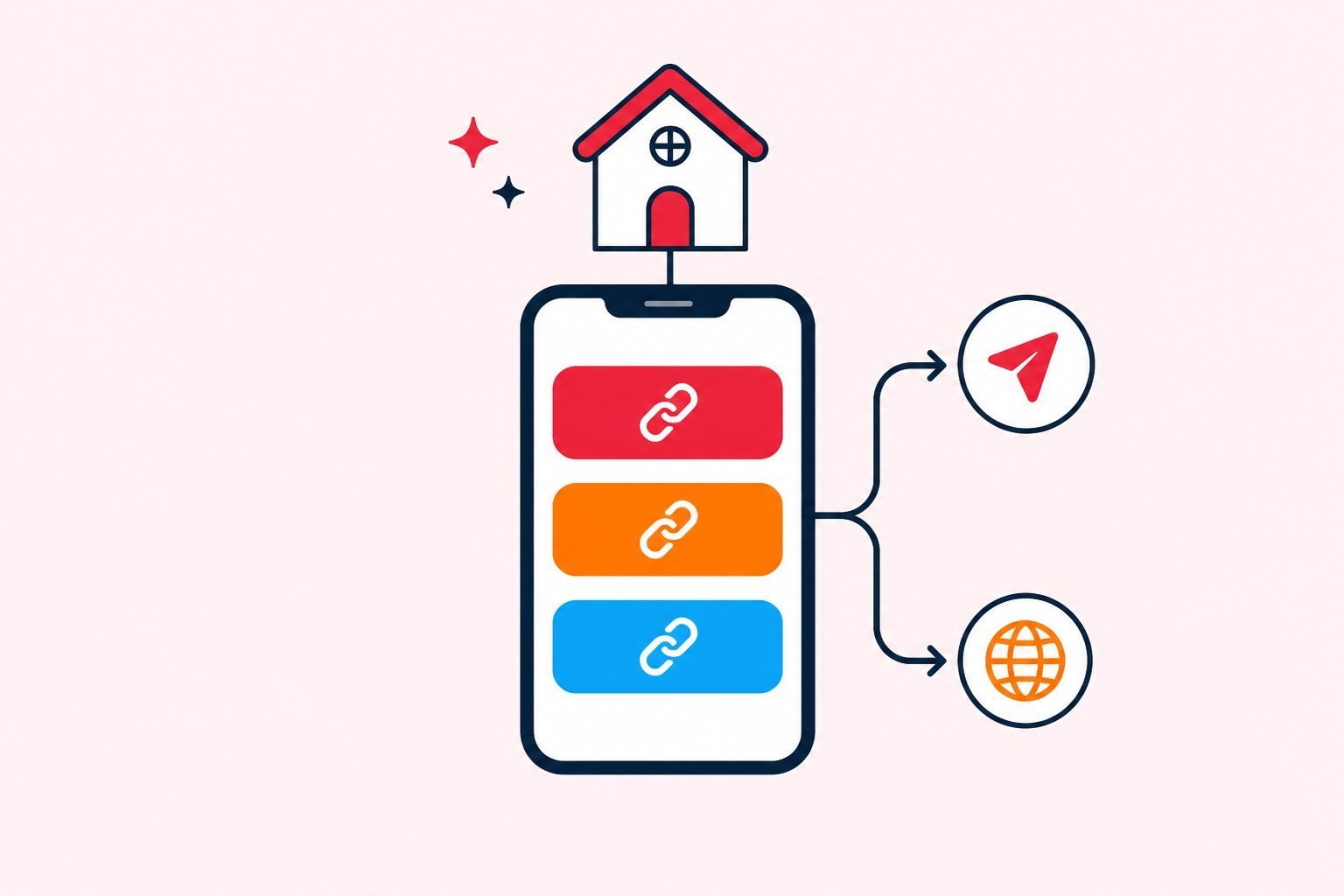
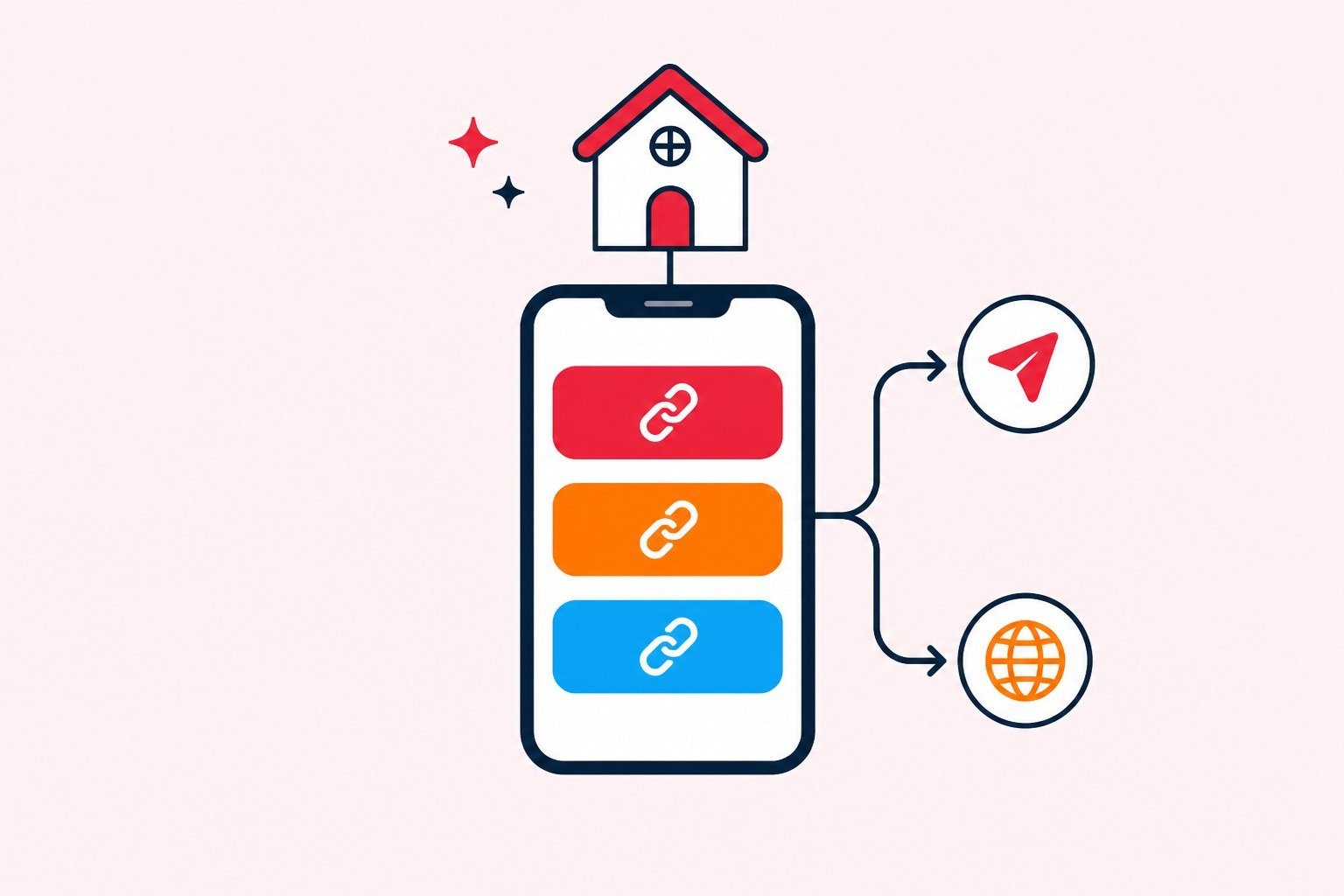
A biolink marketing strategy in 2026 still puts link in bio marketing at the center of what happens after someone opens your social profile - not because you “need somewhere to paste links,” but because that page is where you control CTAs and measurement. This pillar builds a clear biolink funnel from awareness → click → lead, and shows when you need a stronger link in bio hub 2026 such as Appifio Biolink AI. Try it at /create-bio-link.
Why link in bio marketing is still the front door after social
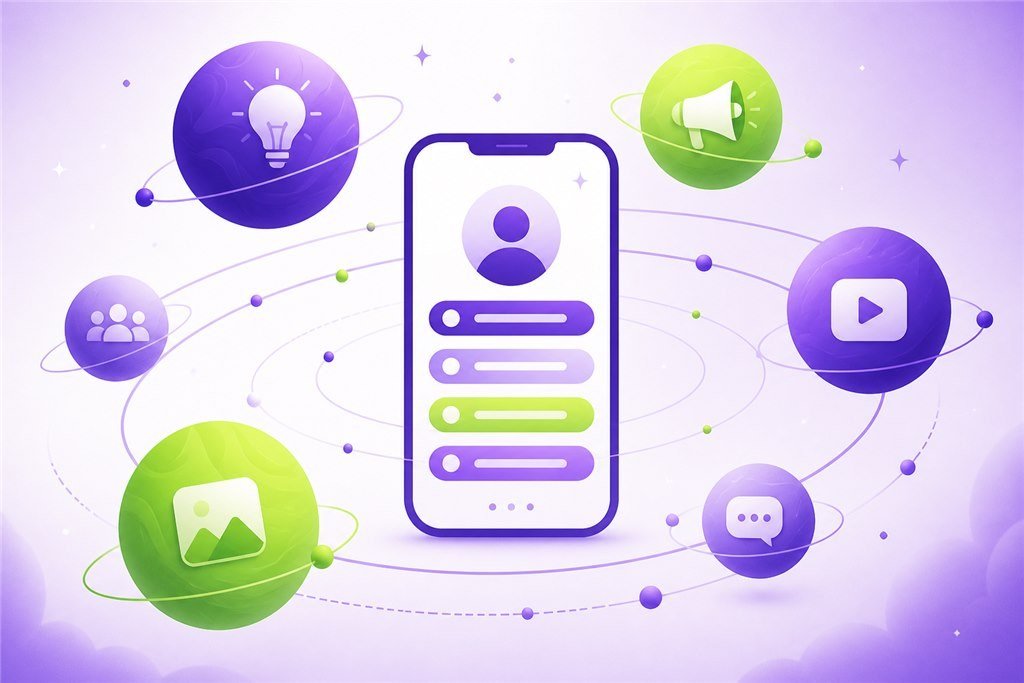
Social platforms buy you reach. The bio buys you direction. Comments often block outbound links, stories expire, and DMs turn into a mess. The URL on your bio is a stable address you can refresh by campaign without rewriting hundreds of old captions. In 2026, when Google and AI search can still index a content-rich bio page, that same URL becomes a light discovery asset - see the link in bio SEO checklist.
Creators and SMEs lose when they treat the bio like a digital business card. A modern bio is a mini funnel: one promise, a few ordered CTAs, a form or catalog, plus click and pixel measurement. If your page is ten equal links with no priority, you are letting visitors invent their own path - and most of them leave.
Compared with sending everyone straight to a marketplace shop: marketplaces are convenient, but you own less brand, upsell, and data. A bio plus owned destinations helps you keep the relationship. For button-only tools versus expandable AI hubs, read Appifio vs Linktree. One bio URL is also easier to govern than dozens of differently pasted caption links - centralization is an underrated growth habit.
Biolink funnel: awareness → click → lead → sale
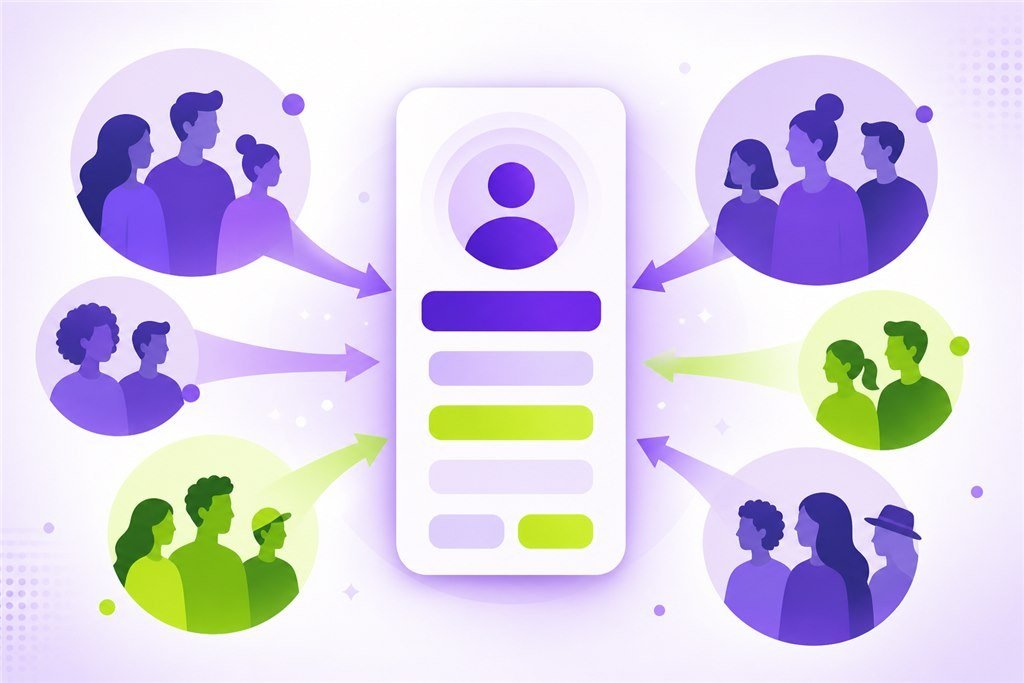
Awareness arrives from content or ads. Click is the move into the bio or a short link. Lead is a form, an intentional chat, or a signup. Sale is payment or a booked appointment. Each stage needs its own number. Confusing clicks with leads is how teams convince themselves “the bio is selling.”
Design the page by stage: top emphasizes this month’s offer; middle carries the lead path; bottom holds content and proof. In quiet seasons the primary CTA can be a free resource. In sale seasons it should be buy or book. That rotation belongs on a calendar - not in a late-night impulse edit.
Wire the measurement stack: short links + UTM for source, pixels for retargeting, and button click stats for layout tests. Without measurement you do not have a biolink marketing strategy - you have a pretty page. A living biolink funnel depends on those three layers.
When a biolink is enough - and when you need a landing or website
A biolink is enough when multi-CTA traffic from social is the main job and the offer does not need a long story. You need a landing or website when ads demand deeper narrative, multi-page SEO, or complex workflows. The common healthy pattern is bio hub + campaign landing. For the sales angle, see biolink for sales.
Do not wait until you are “big enough” to do the bio right. Doing it right is part of how you get bigger. A large website with no social or paid traffic often becomes a stalled project. Start where customers already stand. A link in bio hub 2026 is the cheapest entry layer for learning an offer before you overbuild a site.
Practical rule: if seven out of ten questions can be answered with a few buttons plus a form, stay on the bio. If every visitor needs ten minutes of deep reading, open a landing. Do not expand because a competitor has a long menu.
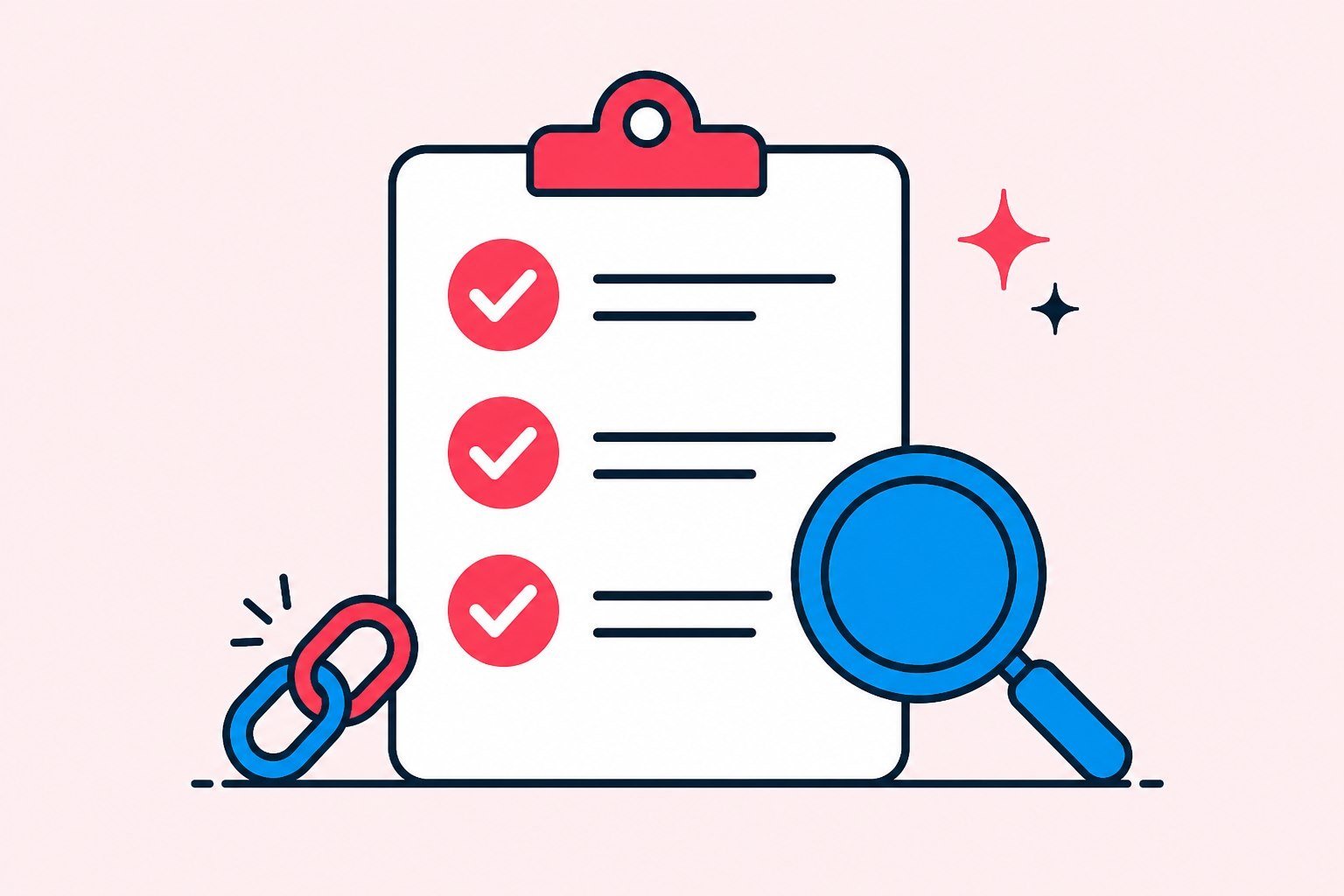
Strategy checklist: CTA, form, catalog
- One value sentence near the top of the page.
- One primary CTA that matches this month’s offer.
- Two to four useful secondary CTAs - not fifteen links.
- A form or chat with a written reply SLA.
- If you use a catalog, feature bestsellers only, with light images.
- Measure button clicks + source UTMs; add a pixel if you run ads.
- Put a weekly review block on the calendar.
This checklist is the spine of link in bio marketing. Skip items 2 and 6 and the bio stays a business card. Skip item 4 and leads go cold. Skip item 7 and you will edit by mood instead of by numbers.
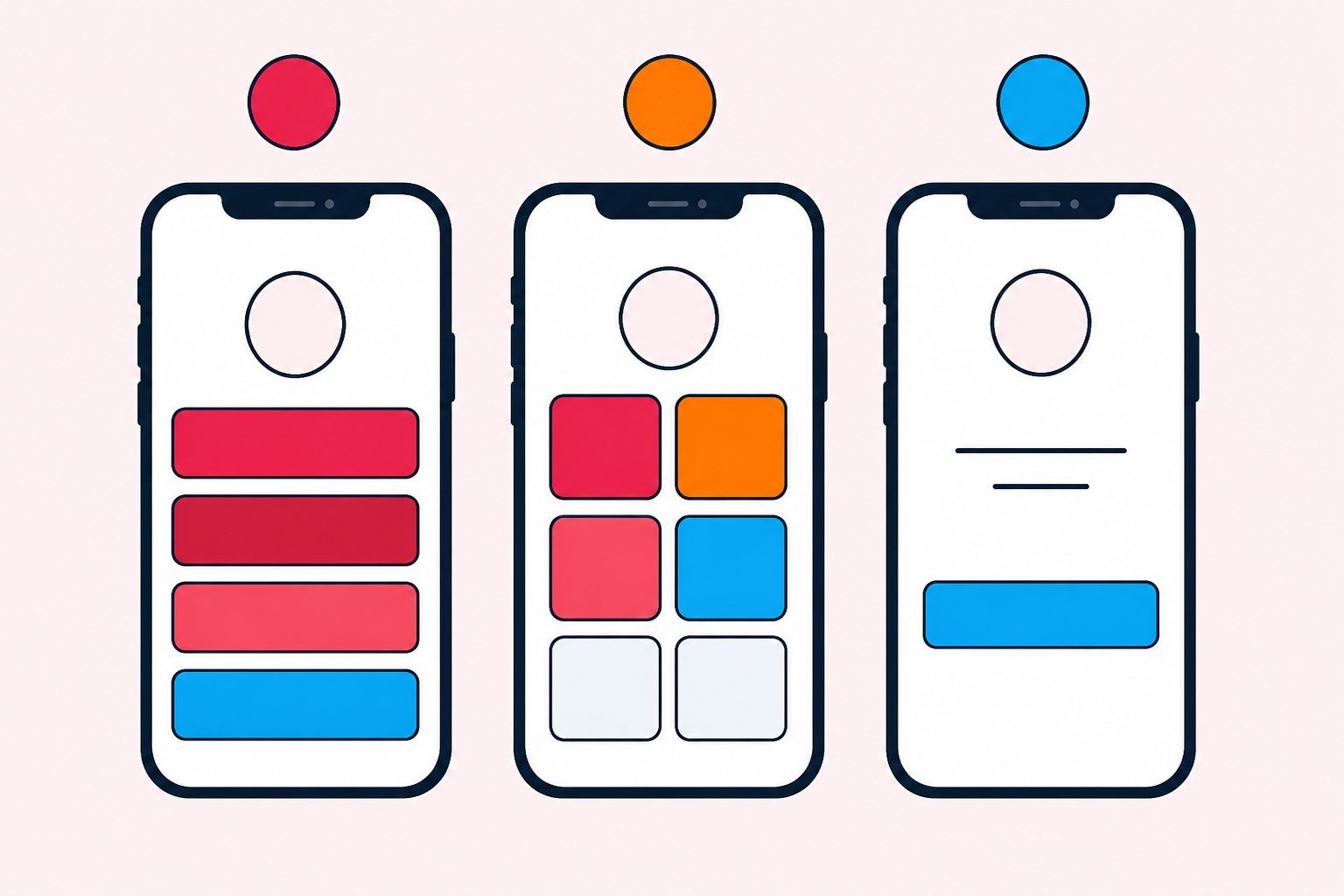
For layout ideas by platform, see Instagram / TikTok / YouTube layouts. For a fast path to live: create a link in bio in 15 minutes.
Measurement and a weekly operating rhythm
Four numbers cover most teams: hub visits, primary-CTA or form-start rate, qualified leads or orders, and cost per lead/order if you pay for traffic. Skim numbers for ten minutes on days with live ads; protect a 30 - 45 minute block each week; archive at month-end.
Add qualitative notes: what people ask, which objections repeat, which creatives pull the right audience. Without notes you only see “the rate dropped” and cannot tell whether price, shipping, or vague copy caused it.
Keep experiments separate from infrastructure. Changing button copy this week is an experiment. Changing UTM naming mid-month breaks infrastructure. Primary pixel, brand domain, and source/medium rules should rarely move - and always with a changelog. Buttons, headlines, and catalog order are allowed to die after two weeks.
AI or manual build - choose by the result you need today
AI fits when you want a usable frame from a short brief, then refine CTAs and proof. Manual build or a template fits when you already know every block. Skip the “AI is better” debate - pick whatever ships a hub that matches today’s offer fastest. Once the frame exists, replace every placeholder string and stock image.
Appifio Biolink AI sits in the same system as landings, short links, and measurement - useful when you do not want five disconnected tools. Product details: biolink AI, biolink manual. Product CTA: /create-bio-link.
A link in bio hub 2026 does not mean “you must use AI.” It means the hub has intent, can be measured, and the team has a review calendar. AI only shortens the time to a workable frame.
The first three months of a biolink marketing strategy
First two weeks: one offer, one CTA, one URL, one minimum measurement method. Do not open five landings “to cover every idea.” The goal is a clean pipe and a team that knows how to read the numbers.
Weeks three to six: run small traffic - organic warmth or light paid. Change only one thing each week: headline, button, form, or source. Write it down. If clicks rise and leads do not, fix the page or the offer before you raise spend. If leads rise and money does not, inspect price, sales script, and fulfillment.
Weeks seven to twelve: scale only what is proven. Add a landing when a second offer is truly different. Add a deeper catalog when bestsellers are already stable. At quarter end: what to keep, what to cut, what to double. That is a biolink marketing strategy as habit - not a pretty slide deck you forget.
Three strategy mistakes more expensive than missing features
Mistake one: many people can edit, nobody owns leads. The bio thrashing; the inbox dying. Fix it with one sheet row: name + job + review date.
Mistake two: measuring one layer, then optimizing another. Watching short-link clicks and blaming the landing, or watching Ads Manager ROAS and calling UTM useless. Each layer answers one question. Meetings without a written question become taste debates.
Mistake three: mixing experiments with infrastructure. Changing a CTA this week is fine; changing naming conventions mid-month breaks process. Teams that reset every month never compound learning.
Defense against all three: a fixed calendar, a one-page sheet, and a rule against changing five things in one day. A team of one to three can run this if they treat operations as part of the product.
Connect bio, landing, short link, and pixel in the right order
Practical order: correct hub/offer → minimum measurement → small traffic → expand. Bio is the multi-CTA door from social. Landing is the single-offer pipe. Short links are campaign addresses plus click counts. Pixels teach ads machines on real touchpoints. UTM is the source label inside your systems. If a layer has no job, cut it - do not turn everything on “to complete the set.”
Even when one person wears every hat, write roles on paper. When you scale, split by layer: hub merchandising, ads URLs, lead follow-up, reading numbers. Dual hats are fine; ambiguity is not.
Organic is not free. Hours writing Reels, answering DMs, and editing the bio are costs. Measure organic with the same discipline as paid; only the cash budget differs. If organic bio taps do not become leads, do not blame the algorithm before you inspect CTA and follow-up.
Before large ads, keep a definition of done: one-sentence offer, one CTA, real proof, measurable, mobile-OK, someone owning leads. Missing one of the six means it is not scale time. That discipline is cheaper than new creative every week - and matches using Appifio as marketing infrastructure instead of a pile of disconnected tools.
Who should prioritize this strategy first
Prioritize early if you are a creator selling courses or digital products, a fashion/beauty shop living on Instagram, a local service booking from TikTok, or an agency managing many clients who need one stable URL. The common thread: customers already live on social, and the team needs a controllable door within days - not months of site building.
You can move slower, or combine layers, when the brand needs multi-page SEO from day one, products are heavily configurable, or internal approvals are heavy. Even then the bio remains a useful gateway; depth still belongs on landings or a website. A biolink marketing strategy does not force you to abandon a website - it stops social traffic from landing on empty space.
If budget is tight, do not split money between a big website build and heavy ads before you have a measurable hub. Ship a minimum biolink funnel first: one CTA, one form or chat, one way to know the source. Then raise media spend.
Agencies should treat the bio as a client asset with an owner and a review date, not as a free add-on after creative. When the retainer includes content and ads but nobody owns the hub, reports stay noisy and every collab invents its own link. Put alias maps and conversion definitions into onboarding the same week you grant access - cheaper than rebuilding trust after a quarter of messy data.
Industry use cases - same hub, different priorities
F&B / local venues: booking or order CTA on top, light menu images, map or hours as secondary. Measure by peak hours, not only by day.
Fashion / beauty: a few hot items plus chat for sizing; during sales, rotate a “pre-order” CTA upward. Keep the full catalog elsewhere if needed.
Courses / coaching: signup form + start dates + one learner proof. Avoid ten podcast links competing with the primary CTA.
B2B services: brief form + capability deck + call booking. A clean hub helps sales see where leads came from when you attach UTM to LinkedIn or email campaigns.
Every industry still follows the same link in bio hub 2026 principles: one promise, one primary CTA, measurable, with a human who follows up. Only button order and language change.
When two offers compete in the same month - for example a course launch and a merch drop - pick a primary and demote the rest visually. Split attention on the hub is how both offers underperform. If you truly need equal weight, open a second landing and keep the bio as a chooser with clear labels, not two identical “Buy now” buttons shouting at each other.
Cluster reading path
After this pillar, go deeper where your bottleneck is: close mechanics in biolink for sales, a ship-today sprint in 15-minute checklist, platform intent in layouts by channel, and discoverability in SEO & AI search. Tool choice: Appifio vs Linktree. Product CTA stays /create-bio-link.
In short
A biolink marketing strategy in 2026 turns link in bio marketing into an intentional hub: ordered CTAs, a biolink funnel measured by stage, and a weekly operating rhythm. A link in bio hub 2026 is not a wall of buttons - it is the center page you control after social. Start simple, measure early, expand when the numbers demand it at /create-bio-link.
FAQ
Do I still need a biolink if I already have a website?
Yes, if customers mostly arrive from social and you want several stable exits. Website and landings handle depth; the bio handles the gateway.
Should one URL serve every platform?
Yes, if primary CTAs still reflect whichever channel is pushing traffic. Measure each campaign with short links/UTM so you know which source wins.
How often should we review the bio?
At least one 30 - 45 minute block per week when traffic exists. Change CTAs on a campaign calendar, not on midnight inspiration.
Is AI required for this strategy?
No. Required pieces are a clear offer, ordered CTAs, measurement, and someone who follows up. AI only helps ship a frame faster.
How is this different from the biolink-for-sales article?
The sales article focuses on CTAs, forms, and catalog to close. This pillar covers funnel, measurement, operating rhythm, and when to expand.